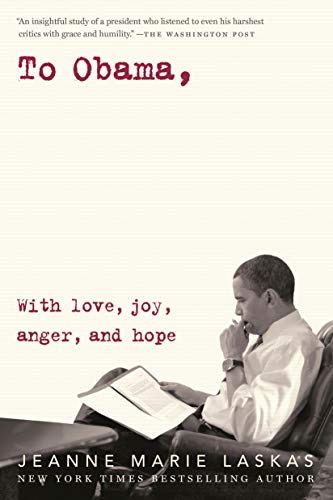
To Obama, with Love, Joy, Anger, and Hope

I didn’t think it was possible for me to love President Obama more than I already did, but after reading To Obama, with Love, Joy, Anger, and Hope by Jeanne Marie Laskas, I fell deeper in love all over again. The thoughtfulness, humanity, and overall care he took with every part of his job and just being is remarkable. I had no idea that over his presidency, he read 10 letters every night. The book highlights those letters and the stories of the people who wrote them and also teaches about the Office of Presidential Correspondence. It is a fascinating book about a wonderful man. It makes me even more despondent (is that even possible?!) about the current state of our country.

“…he’s exactly who I hoped he was when I voted for him. He made me feel like someone was steering the ship. That, if we just hung on, we’d be OK. It was like, we’ve got somebody at the top who cares. And that matters for something.” (p. 315)

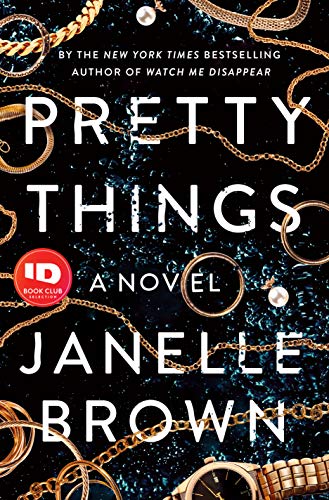
Pretty Things

I’m not sure how Pretty Things by Janelle Brown ended up on my list, but it’s an interesting story. I hadn’t liked Brown’s earlier book Watch Me Disappear, but I thought I would give this one a try anyway. It was a good story – about a con-artist couple and the twists that happen when they go through a major heist. At almost 500 pages, the book was definitely too long, but I did enjoy it. And, unlike her last book, the ending of this one wasn’t one I figured out ahead of time. I would give it four stars, but for the length.

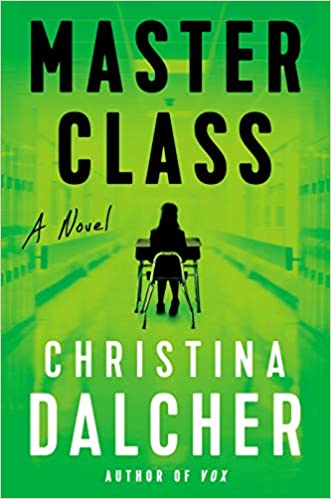
Master Class

Master Class by Christina Dalcher is set in the future in a time when a child’s potential is determined by their Q score, a standardized measure including test scores, behavior, etc. If you do well, you attend a silver school. Have a low score, you are shipped off to a yellow boarding school. The main character is Elena Fairchild, a silver school teacher whose husband helps to run this system. They have a silver school daughter and one who isn’t going to make it. It’s a rather alarming book, but a quick read, however, there were some holes in the plot that didn’t make sense and overall, while I enjoyed it, I was left with questions. It’s like Handsmaids Tale, but not as well executed.

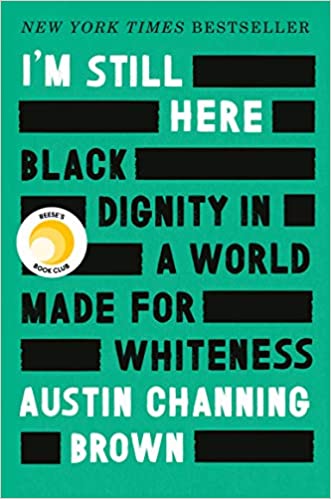
I’m Still Here

Reese Witherspoon chose I’m Still Here: Black Dignity in a World Made for Whiteness by Austin Channing Brown as one of her June book club reads. I LOVED THIS BOOK. Brown is funny and tragic in the retelling of the role of racism in her childhood and adult life and I really enjoyed this collection of essays. The only reason I didn’t give it five stars was the heavy Christian layer. However, even so, I would grab a copy if you can get one!

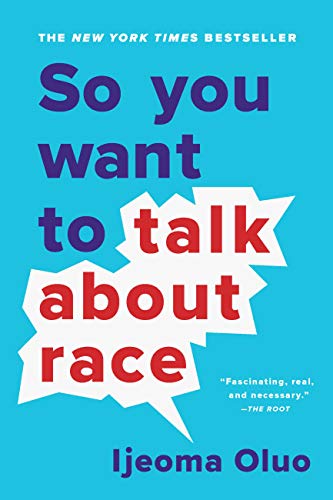
So You Want to Talk About Race

So You Want to Talk About Race (backordered as of 7/15/20) by Ijeoma Oluo is a fantastic book. While I was disappointed that Oluo did not read it herself, the narrator did a good job. I’ve done a lot of driving back and forth to the beach this summer and this was a great listen. I particularly enjoyed Chapter 8 about schools and Chapter 12 on microagressions. Overall, though, it provided such a great way to think about talking about race and issues of race. I also appreciated the stories she told about her own life experiences. Some of the book repeated information I have learned in other books, but overall, if there is only one book you choose to read about race this summer, I would choose this one.

Knockout Queen

I’m lukewarm on Knockout Queen by Rufi Thorpe. On the one hand, it was an interesting story about a gay teenager whose mother goes to jail and he moves in with his aunt and befriends the girl next door. On the other hand, it was a bit overly detailed for me. Amazon describes it: “With storytelling as intoxicating as it is intelligent, Rufi Thorpe has created a tragic and unflinching portrait of identity, a fascinating examination of our struggles to exist in our bodies, and an excruciatingly beautiful story of two humans aching for connection.” I don’t disagree with this description, but even though it gets rave reviews on Amazon, it wasn’t particularly my favorite.

Rodham

I generally enjoy books by Curtis Sittenfeld and put Rodham on my summer TBR list a few months ago. Lucky for me, the DCPL and MCPL were swimming in available Kindle titles this summer and I got so many books for free! I really enjoyed this story. It took what could have happened if Hillary had not married Bill and ran with it. While I didn’t realize this at first and was a bit confused when she broke up with him, I had said, as reading about their dating life, “Geez, why did she marry him?” and then, she didn’t. It was very satisfying and had a particularly satisfying ending, which I won’t spoil for you. This is a fun romp and I would recommend it!

White Fragility: Why It’s So Hard for White People to Talk about Racism

White Fragility: Why It’s so Hard for White People to Talk about Racism by Robin DiAngelo has been on my shelf for a while. I read What Does it Mean to be White (reviewed here) in a book group at school and heard her speak at a conference. White Fragility was a quick read, and one that reiterated a number of the same ideas in What Does it Mean to be White. However, there were a number of good take-aways, especially in the last chapter, “Where Do We Go from Here.” This is a good primer on the concept of white fragility and includes useful information and things to think about in one’s own experience.

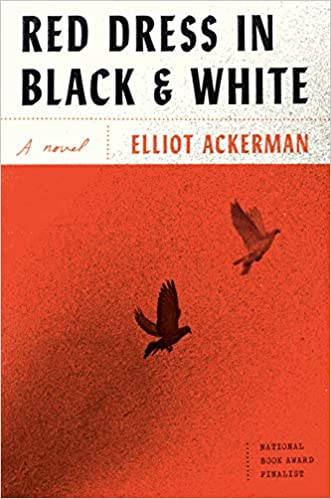
Red Dress in Black and White

Red Dress in Black & White by Elliot Ackerman ended up on my TBR list somehow and then was also recommended by a friend. It all takes place in one day with flashbacks to earlier times. It’s the story of an American expat living in Istanbul who seeks to take her son and leave her husband. I slogged through this one until about the last quarter. The pace picked up and the story became much more interesting. On the whole, however, even with the better last quarter, I don’t recommend this one. I didn’t like the characters and didn’t really care about what happened to them.

How to be an Antiracist

How to be an Antiracist by Ibram X. Kendi is everywhere right now and you are lucky if you can get your hands on a copy (link is to local Mahogany Books where it is presently – July 14, 2020 – backordered). How to be an Antiracist included a good amount of the history found in Stamped (reviewed here) but woven in and among personal stories and Kendi’s own theories on racism and antiracism. I enjoyed reading Kendi’s own stories and learned a great deal from his theories, but, in moments, found the text a bit dry. I imagine this is mostly because I just read Stamped where the style (Jason Reynolds’) is quite different. Overall, however, How to be an Antiracist is an informative and important read.

“The history of racist ideas is the history of powerful policy-makers erecting racist policies out of self-interest, then producing racist ideas to defend and rationalized the inequitable effects of their policies, while everyday people consume those racist ideas, which in turn sparks ignorance and hate. Treating ignorance and hate and expecting racism to shrink suddenly seemed like treading a cancer patient’s symptoms and expecting the tumors to shrink. The body politic might feel better momentarily from the treatment–from trying to eradicate hate and ignorance–but as long as the underlying cause remains, the tumors grow, the symptoms return, and inequities spread like cancer cells, threatening the life of the body politic. Educational and moral suasion is not only a failed strategy. It is a suicidal strategy.”

(page 230)